Blog

  • How a Tour de France Queen Stage Inspires My Backyard Climbing


    The Queen Stage of the Tour de France is legendary.

    It’s the day when the race splinters apart, where heroes are made and hearts are broken. It’s where cyclists aren’t just racing each other. They are battling gravity, weather, and the quiet voice of doubt inside their own heads.

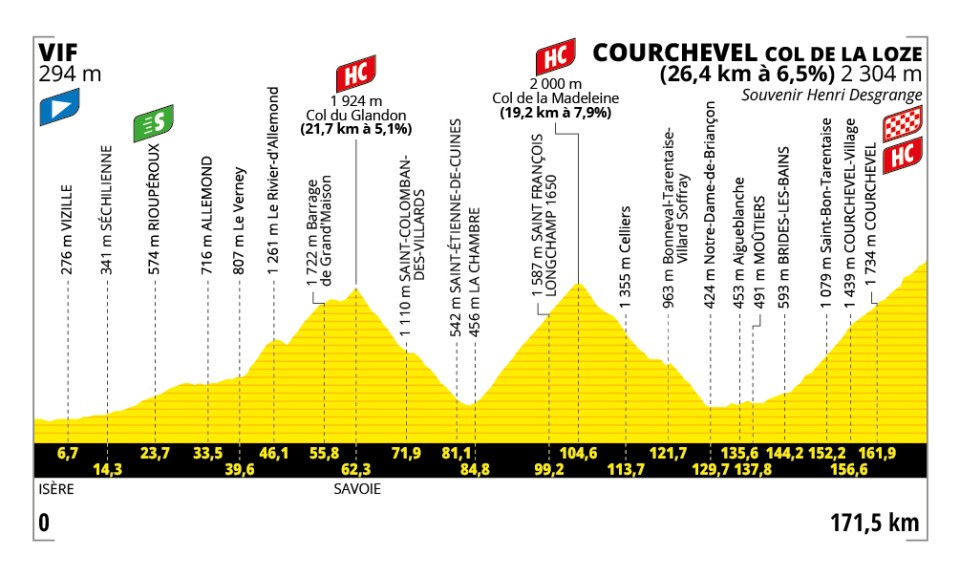
    This year’s Stage 18 is a classic: three monumental climbs. The Col du Glandon, Col de la Madeleine, and the mighty Col de la Loze, each bigger, steeper, and more demanding than the last. Together, they form a brutal alpine gauntlet that will test even the world’s best to their limits.
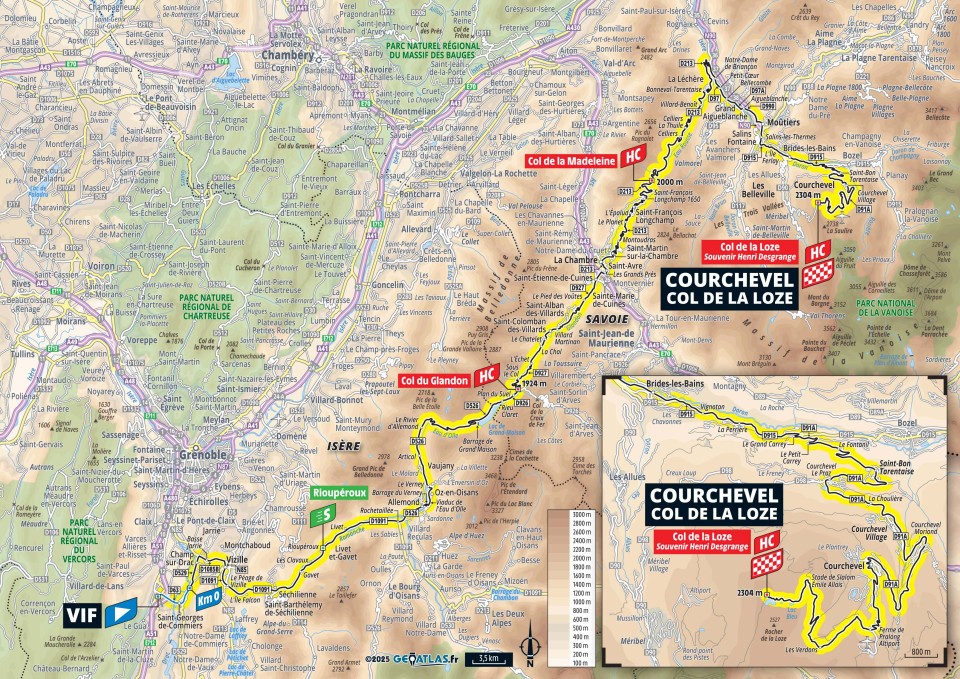
    I won’t be there. I’ll be tucked away in Ireland’s midlands, hundreds of miles from the roaring crowds and snow-dusted peaks of the French Alps. But that doesn’t mean I can’t ride my own Queen Stage, right here in the quiet heart of the Sliabh Bloom Mountains.

    Let’s talk numbers – because every cycling story needs a reality check.

    The Tour de France Queen Stage this year clocks in at a whopping 171 km with a mind-boggling 5,500 metres of climbing. That’s the kind of ride where even the pros wonder if their legs are secretly made of jelly.
    My own Queen Stage here in the Sliabh Blooms? A modest 118 km with a humble 1,620 metres of ascent.

    https://www.strava.com/routes/3230112157221185274

    Put another way: The Tour de France is climbing Everest, while I’m more like hiking a very persistent hill… with occasional coffee breaks.

    My legs aren’t screaming in three languages and I’m not dodging helicopters or fan mobs, but hey! I do get to enjoy the luxury of not needing a team car or a personal masseuse at the summit (actually that would be a great idea).

    So, while my “Queen Stage” might not feature on Eurosport or break any records, it’s my version of royal treatment: all grit, no glamour, and a lot of caffeine.

    And honestly? I’ll take that any day.

    The Cut, The Wolftrap, and Glendine: Our Mini-Monsters

    We don’t have 20-kilometre ascents or dizzying switchbacks carved into towering cliffs. But what we do have are climbs with character, steep, stubborn hills that demand respect.

    The Cut, The Wolftrap, and Glendine are known to every cyclist around here. They might not show up on international broadcasts, but their reputations precede them in every local club spin and whispered café conversation.

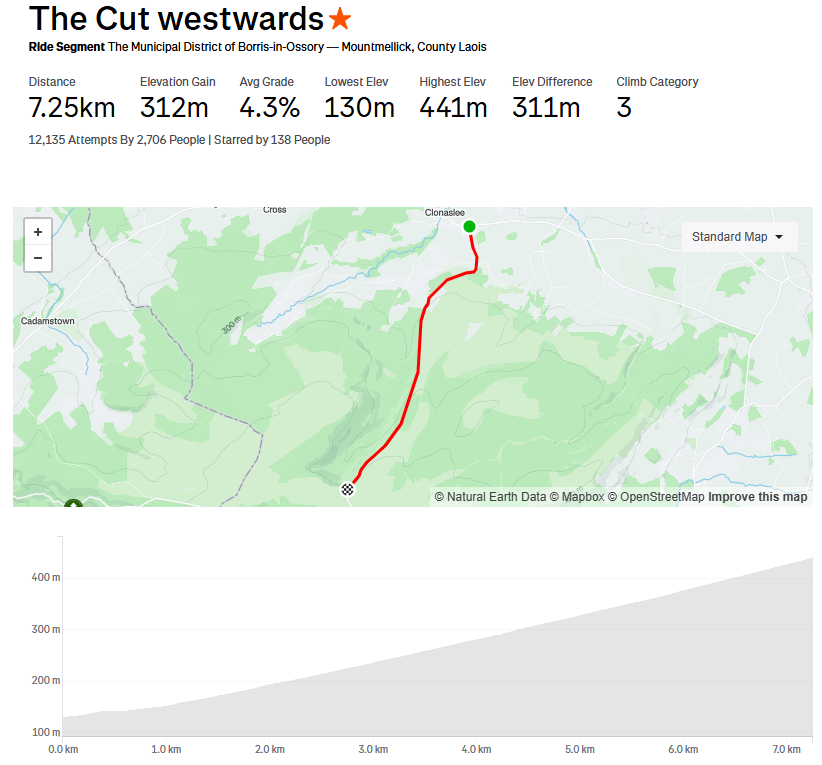
    The Cut is a staple of both Rás na mBan and the men’s Rás, a climb known for breaking up the bunch. In 2024, the tough ascent shattered the peloton in the women’s race, with just 23 riders reaching the summit in the front group. By the finish, the top 20 were separated by only seconds, but some of the stronger county riders lost minutes. The 2025 men’s Rás also tackled The Cut on Stage 4, with the fast, technical descent proving as decisive as the climb itself, before a high-speed sprint finish in Mountrath town centre.

    The Cut: Deceptive: it looks gentle at first, but the steady grind and exposed sections test your mental grit.
    The Wolftrap: A sharp sting in the legs, with sustained gradients that seem to drag on forever.
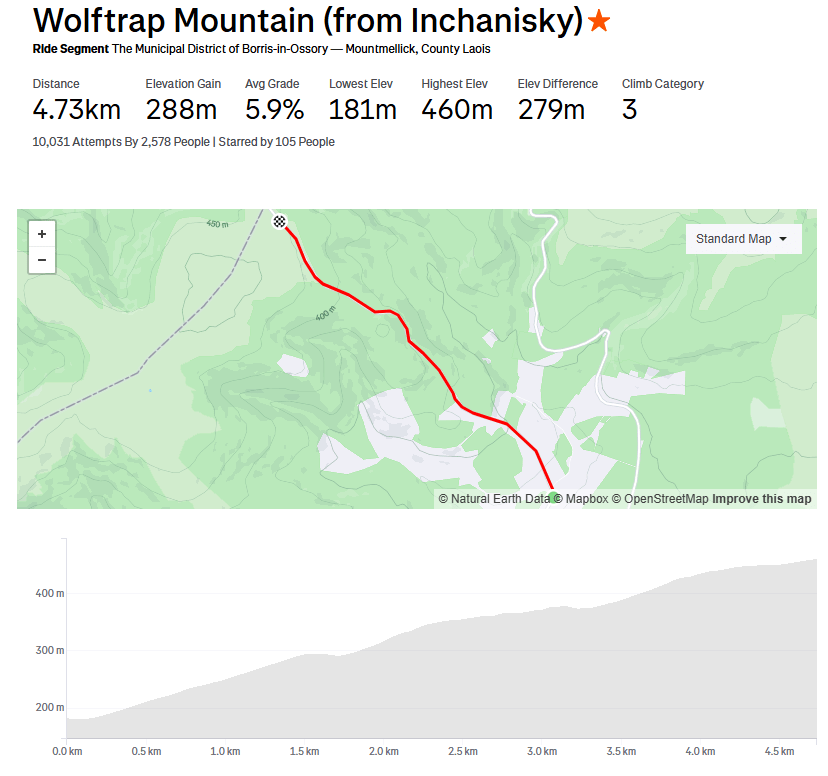
    Glendine: Quiet, remote, and when ridden at pace, it leaves your lungs pleading for mercy.
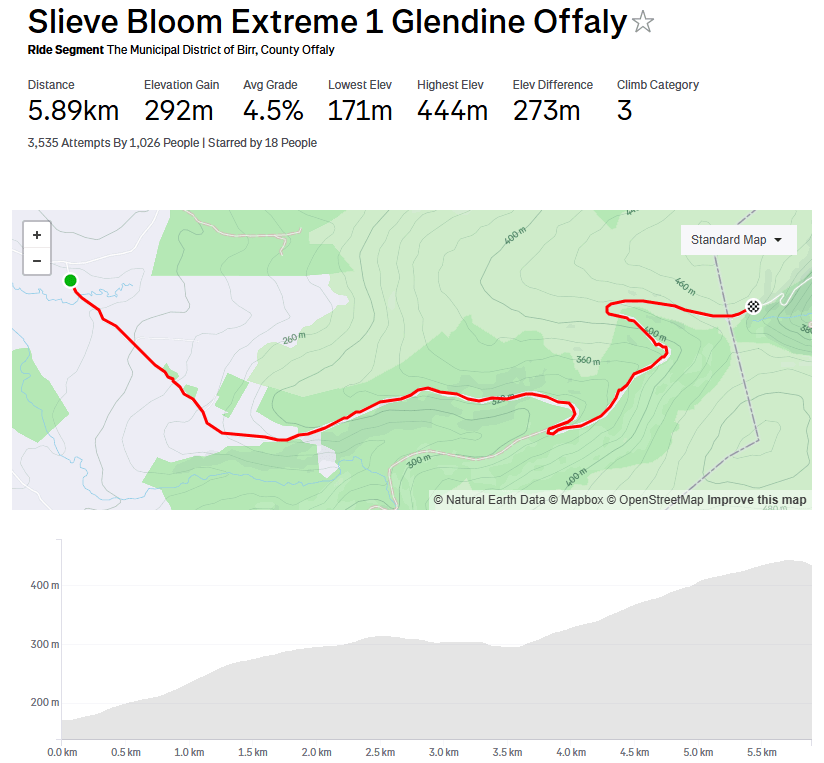
    They may only be a few kilometres long, but underestimate them at your peril. They’re small in scale compared to the Alps, but in spirit? They pack every bit as much bite.

    Espresso Over Energy Gels

    Watching the pros, I always marvel at the precision of it all. Team cars glide behind the peloton, carrying a mobile arsenal of nutrition – energy gels, electrolyte drinks, protein bars, all meticulously prepared and distributed on cue.

    For me, race-day fuelling starts a little differently. It begins with a stop at the local café (Peavoy’s) in Kinnitty, the hum of the coffee machine replacing the roar of team cars. A flat white or an espresso, maybe a slice of banana bread if I’m feeling indulgent, that’s my fuel.
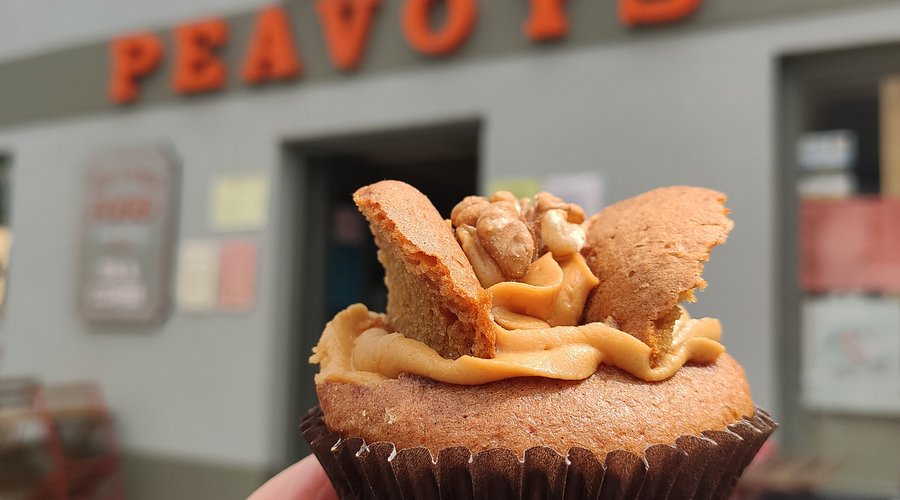
    It’s not precision sports science. But somehow, the familiar comfort of that warm cup and the friendly nod from behind the counter carries me further than any energy gel ever could.
    And besides, when you ride alone, you take your motivation where you find it, and sometimes, that comes in a porcelain cup.

    Audiobooks Over Team Radios

    On the Queen Stage, the riders are constantly connected. Radios buzz in their ears with tactical instructions, updates on breakaways, split times, wind direction, even reminders to eat and drink.

    Out here, it’s different.

    My team radio? An audiobook, playing softly as I grind my way through the Sliabh Blooms. Some days it’s history, other days it’s a thriller or cycling memoir. The steady rhythm of a narrator’s voice fills the silence between breaths, turning even the hardest climbs into something meditative. Right now? It’s Matt Rendell’s “The Death of Marco Pantani” Biography, and who better to inspire a climbing performance than the greatest climber in recent Grand Tour history. Il Pirata è una leggenda.

    It’s not tactical data or split-second instructions. But it keeps my mind steady, distracts me from the fire in my legs, and transforms a solo ride into a quiet escape.

    The Lonely Roads vs. The Frenzied Tour

    During the Tour de France, the mountain stages are a festival. Fans line the roads in their thousands. Flags wave, cowbells clang, smoke flares drift across the tarmac. Helicopters hover above, TV cameras tracking every grimace, every attack.

    It’s chaotic. It’s electric. It’s beautiful.

    The Sliabh Bloom Mountains, in contrast, offer the exact opposite. The roads stretch out ahead, empty and quiet. The only spectators are the occasional sheep, a curious bird, or the distant rustle of leaves.

    But in that emptiness, there’s space to think. To hurt. To push. To reflect.

    And the questions the Tour riders face on the brutal slopes of the Madeleine and Loze?

    Can I keep going? How much do I have left?

    I ask those same questions here. The scenery might be gentler. The stakes lower. But the internal battle? That’s universal, By the time we have climbed the first of my mighty Col’s I am now trapped within the Sliabh Bloom fortress. The quickest way home is to keep climbing.

    Battling the part of my brain that seeks out shortcuts, or alternate softer routes.

    The Spirit of the Queen Stage Lives Here Too

    No, the Wolftrap doesn’t scale snow-capped peaks. The Cut won’t earn you a polka-dot jersey. Glendine won’t feature on international broadcasts.

    But that doesn’t mean these climbs lack meaning.

    In every gasp for air, every burning quad, every moment of doubt, the spirit of the Queen Stage lives on. It’s not about the altitude. It’s about the attitude. It’s about showing up. Turning the pedals. Climbing your own mountain, however small or steep.

    Whether it’s the Alps or the Blooms, the challenge is the same: overcome the road, and overcome yourself.

    Your Own Backyard Queen Stage Awaits

    The Tour de France might have its iconic climbs: Alpe d’Huez, Mont Ventoux, Col de la Loze. But every cyclist has their own battleground. For me, it’s the familiar roads winding through the Sliabh Bloom Mountains.

    The gradients may be shorter. The roads quieter. But the satisfaction? That’s no different.

    So next time you zip up the gilet, clip in, and head out the door, remember this: your own Queen Stage is out there. It might be hidden in a familiar climb. It might be tucked away on a quiet road. You don’t need roaring crowds or TV cameras to make it count.


    Find your climb. Ride your race. Write your own legend.
  • Discover Tuscany: A Unique Gravel Riding Experience

    Discover Tuscany: A Unique Gravel Riding Experience

    5 Days of Soulful Riding with Matteo Cigala

    Some trips challenge your legs. Others stir your spirit. And then there’s Tuscany Gravel, a week-long journey that does both, brilliantly.
    Led by former pro cyclist and gravel enthusiast Matteo Cigala and supported by Marine Lenehan this ride was not just a tour; it was a rolling immersion through one of Italy’s most iconic landscapes. Over five riding days, we climbed ridgelines, coasted through medieval towns, indulged in Tuscan cuisine, and shared in a collective sense of wonder, and yes, just enough suffering to feel we had earned the magic.

    Day 1: Arriving in Donoratico – The Calm Before the Climb


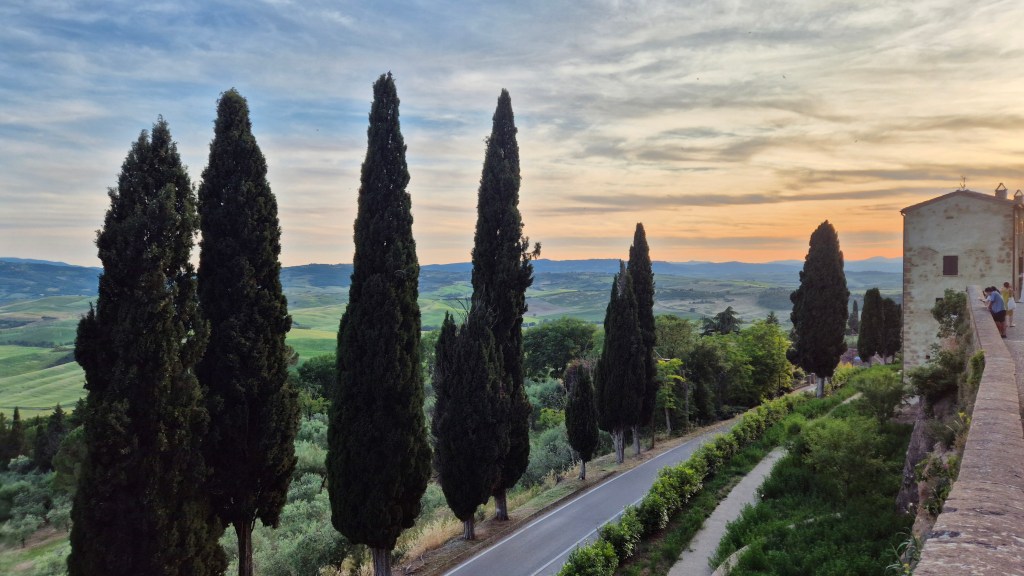
    We landed in Florence and Pisa before converging on Podere Conte Gherardo, a tranquil country estate nestled near the Etruscan coast, late in the evening. Warm evening light filtered through cypress trees as we settled in, met the crew, tuned our bikes, and shared our collective cycling experience. Matteo’s easy confidence and deep local knowledge were immediately clear, we knew we were in good hands. There was some nervous energy amongst those of us who had yet to experience gravel.

    Day 2: Donoratico → Fabbrica di Peccioli


    Distance: 98 km | Elevation: 1200 m
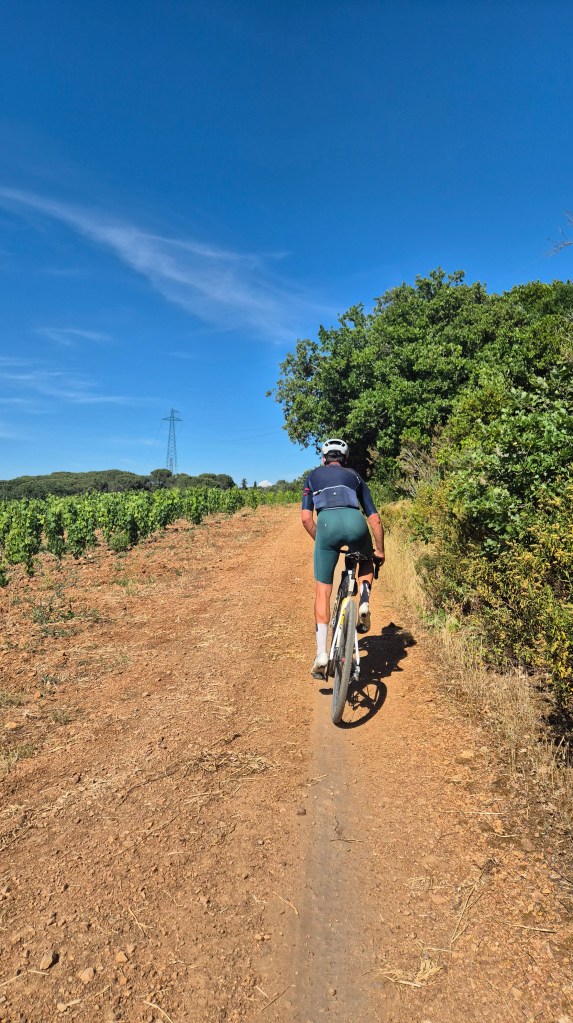
    The first real pedal strokes brought us through a sun-dappled mosaic of vineyards, oak forests, and rolling gravel lanes. The route was fast and flowy, with just enough punchy climbs to wake up the legs. Espresso stops were not as frequent as my poorly toned legs felt necessary, but it was essential to press on through the gorgeous view of hilltop villas and distant sea. The baking Italian sunshine working on our pale and pasty Irish skin. The mostly flat morning had the “roadies” amongst us wondering what all the fuss was about. This was handy. Beautiful, but no harder than road cycling.


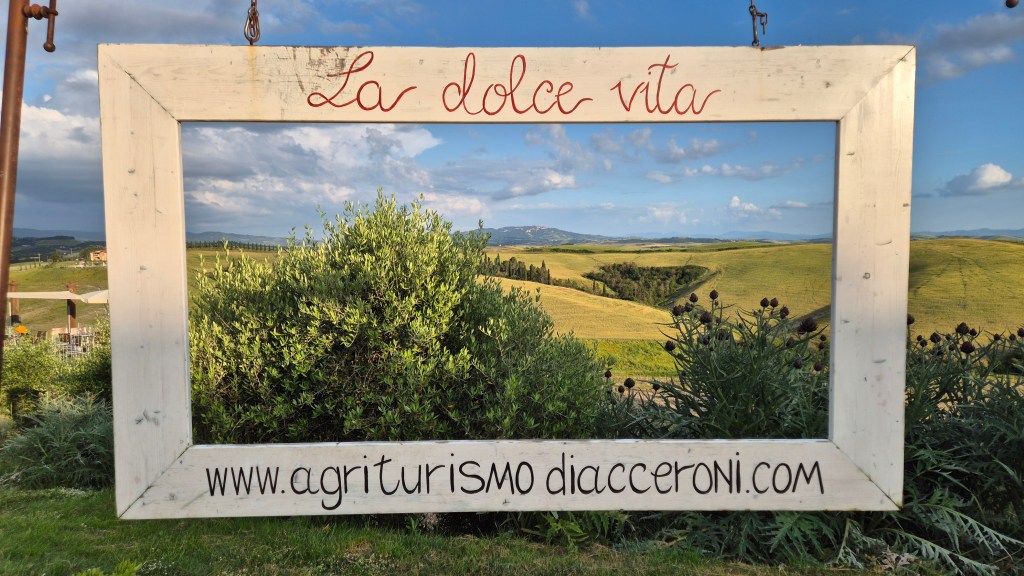
    The afternoon that put me firmly back in my box. I had concluded that even a 1% descent feels like a hill on gravel, and there is an unrelenting rolling nature to it, lots of micro-accelerations, and a lot of demand for particularly good bike handling. We arrived in early evening to Agriturismo Diacceroni, perched on a quiet ridge with panoramic countryside views. Think farmhouse charm, open-air dining, and food so fresh it may have been picked that afternoon. The staff sent us homemade pizza until we were fit to burst, watching the intensity of the sunset deepen. With weary legs, we made our way to bed to the sounds of cicadas and clinking glasses from nearby tables.

    Day 3: Fabbrica di Peccioli → Colle Val d’Elsa


    Distance: 70 km | Elevation: 1500 m
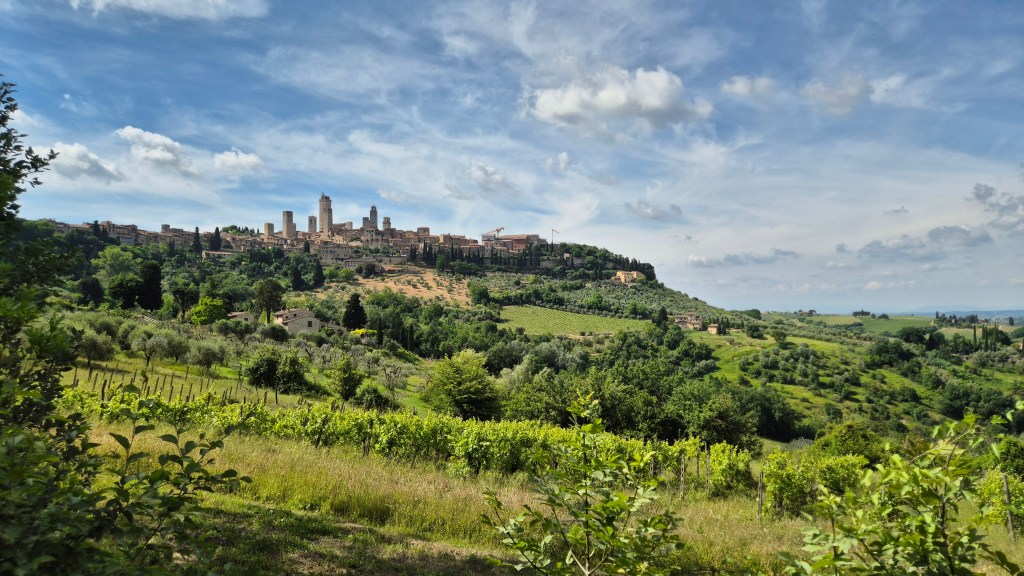
    Do not let the shorter distance fool you, this was a big day. The gravel got steeper and rougher, and the views more dramatic. We traversed a series of ridge roads with sweeping views of classic Tuscan valleys, flanked by vineyards and castles that seemed unchanged since the Renaissance. The uninitiated to gravel got a sharp dose of reality today, and we made our way through very rough chunky rocks both ascending and descending. Our experienced American friend christening them “gnarly.”


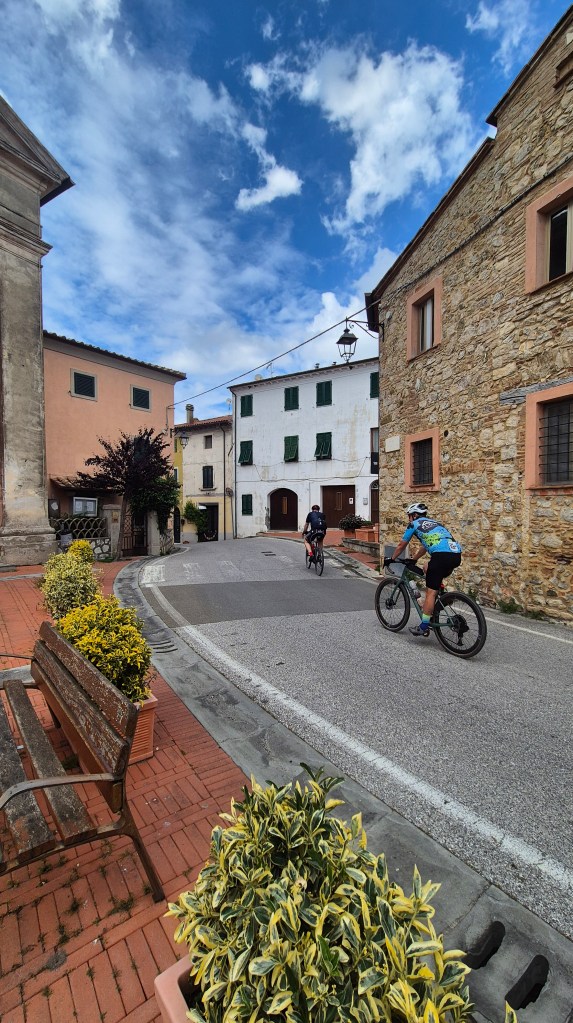
    The descent into Colle Val d’Elsa, a fortified town with cobbled streets and hidden piazzas, was pure joy. We landed at Relais Della Rovere, a 12th-century abbey turned luxury hotel, where we lounged by the pool and dined like royalty in vaulted stone halls. This hotel was truly a taste of Italian luxury, reminding me that Matteo and Marine really know how to pick them. One of the other guests, an Italian maestro on the gravel bike revealed himself to be similarly talented with the wine list, and he became our tour sommelier for the remainder of the week.

    Day 4: Colle Val d’Elsa → Pienza


    Distance: 108 km | Elevation: 1700 m
    This was the Queen Stage, the crown jewel, and the most demanding ride. The Crete Senesi region greeted us with its iconic clay hills, dramatic ridgelines, and ancient roads that had our tyres dancing on loose gravel. Every climb brought us deeper into the Tuscan soul. The climbs in the first half of the day were intense, even with the gearing on gravel bikes. The first climb out of Colle Val d’Elsa was a cobbled masterpiece that was 1.3km long averaging 15% and reaching 30% in spots (the most exciting moment is finding when you get to the top that there is an elevator). But we faced other long, steep, and rough ascents. Adapting quickly to the differences in road bikes and gravel bikes, with quickly churning legs in an uncomfortably high cadence, sat in the saddle to keep the grip on the back wheel. Lunch was in Siena, the glorious Italian home of the “white roads” of Strade Bianchi fame.


    By the time we reached Pienza, in the evening time, a UNESCO-listed town famed for pecorino cheese and renaissance architecture, we were exhausted and elated. We had an aperitif overlooking the beauty of the Tuscany hills, surrounded by wedding photography shoots and Instagram influencers waiting to catch the perfect moment. Dinner at La Terrazza Del Chiostro was an emotional one: warm lights, sunset views over the valley, and plates that tasted like poetry.

    Day 5: Pienza → Marina di Grosseto


    Distance: 126 km | Elevation: 1650 m
    This stage felt like a transition, from mountains to sea, from introspection to celebration. We weaved through olive groves and cork forests and finally descended to the Tyrrhenian coast. The salty air felt like a reward. This day was long and extremely hot, but we were gaining confidence on the gravel now, and the watts were starting to come. Too much power for one of the guests, who has almost zero experience on the bike. Such a warrior, never knowing when he was beaten, pushing everyday to be near or off the front. Too much power on a loose gravel descent saw him take a small spill, but again, heroic to the last, dusted himself off and pushed to bridge across to the lads at the front again.


    We rolled into Hotel Terme Marine Leopoldo II, our seaside sanctuary, where we dipped tired legs in the pool and swapped ride stories over seafood at Ristorante da Nevo. The mood? Euphoric.

    Day 6: Marina di Grosseto → Donoratico


    Distance: 104 km | Elevation: 1000 m
    The final stretch was smoother and more relaxed, like a proper farewell ride. Laughter replaced grimacing. Legs, though weary, seemed lighter, maybe from the mileage or maybe from the bittersweet awareness that this was the end. There was a fabulous moment in the forest where we had an absolutely incredible stretch of single track that must have gone on for 45 minutes to an hour. Relentless, beautiful, up, and down, whipping left and right, through mud, streams, branches, it was easily the most fun I had ever had on a bike. The route took us through quiet coastal towns and pine forests before circling back to Podere Conte Gherardo, where it all began. Beautiful clifftop paths that gave tantalising glimpses of the cool and refreshing sea, we stopped briefly to chat with some wizened Italian cyclists who looked stronger and fresher than me, even in their mid-eighties.


    We wrapped it all up at Locanda Menabuoi, one last Tuscan feast, one more round of Chianti, and a few emotional toasts to new friendships and shared adventure.

    Reflections from the Saddle


    Tuscany Gravel wasn’t just about riding bikes. It was about slowing down, even as we sped up. About connecting, to the land, to the culture, and to each other. Matteo Cigala brings a rare mix of pro-level expertise and heartfelt hospitality. You will never feel rushed, but you will never feel unchallenged.
    This trip gave me sore legs, stunning memories, and a stronger love for gravel riding. And it reminded me that sometimes the best way to discover a place, and yourself, is by bike.

    Would I do it again? Absolutely.
    Would I recommend it? Without hesitation.
    Would I trade a week on the bike for anything else? Not in a million switchbacks.